Nurse Anesthesia (CRNA)
Application opens: July
Application deadline: March 1
Interviews begin: late April
Start Your Application
Concentration overview
Rooted in a legacy of excellence established by pioneering nurse anesthetist and educator Helen Lamb, the Barnes-Jewish College Goldfarb School of Nursing’s CRNA program is nationally recognized as one of the top nurse anesthesia programs in the country. Lamb, who served as director of the Barnes School of Anesthesia from 1929 to 1952, helped shape rigorous educational standards that continue to influence nurse anesthesia education today.
Building on this strong foundation, the program is currently ranked No. 9 by U.S. News & World Report in its most recent “Best Graduate Schools” rankings. Designed to prepare highly skilled certified registered nurse anesthetists, the program equips graduates for the full scope of practice, preparing them to administer anesthesia to patients across the lifespan in all care settings, regardless of patient acuity.
This full-time, 36-month program combines rigorous coursework with extensive clinical experience and is accredited by the Council on Accreditation of Nurse Anesthesia Educational Programs and the International Federation of Nurse Anesthetists.
Due to the intensity of the curriculum, students are strongly encouraged not to work while enrolled.
Program length | Start | Curriculum |
No. 9 Best Nursing-Anesthesia School
Goldfarb's CRNA program has been ranked No. 9 by U.S. News & World Report as part of the "Best Grad Schools" 2026 rankings, based on a survey of academics at peer institutions.
Concentration highlights
The Nurse Anesthesia Program integrates advanced technology with hands-on training to equip students with the knowledge and skills needed for a successful career after graduation.

Clinical training at top institutions |
| You’ll have an opportunity to fulfill your clinical training through affiliations with the region’s top institutions at Barnes-Jewish Hospital, Barnes-Jewish West County Hospital, St. Louis Children's Hospital, Children's Hospital Specialty Care Centers, Progress West Hospital, Missouri Baptist Medical Center, and Shriners Children's. |
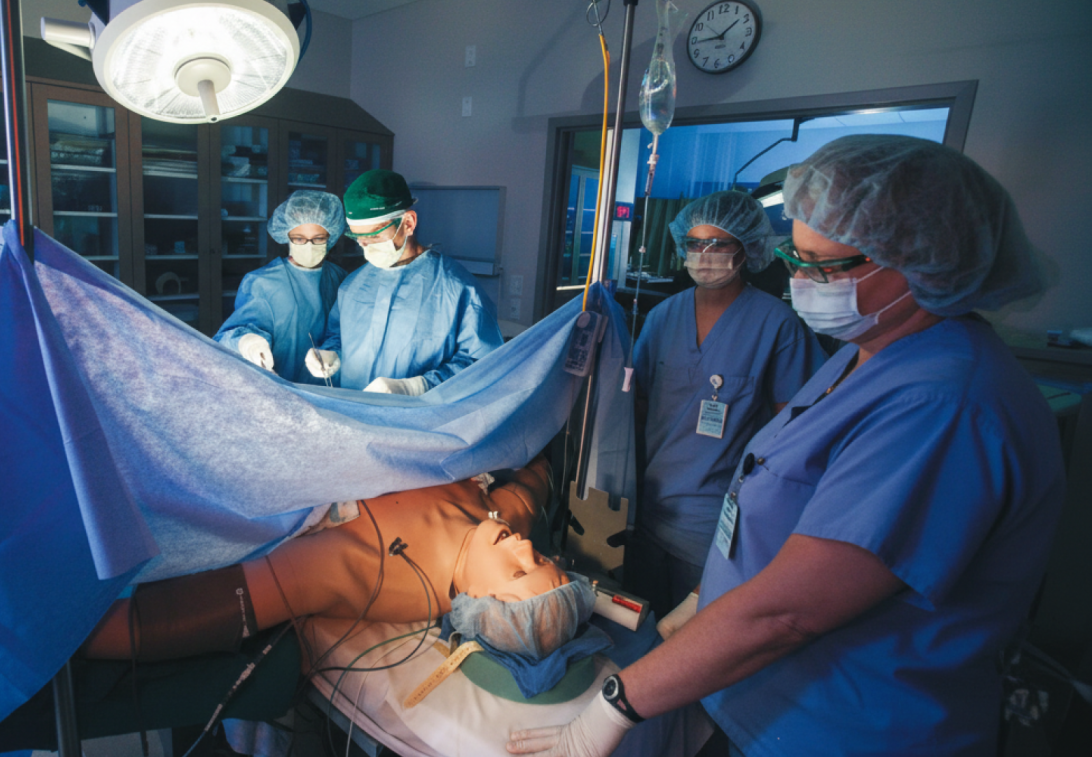
World-class clinical simulation institute |
| Goldfarb is home to the Clinical Simulation Institute, where you will implement classroom knowledge through clinical scenarios and skills labs. Simulation is routinely used to equip students with a comprehensive understanding of the full range of anesthetic procedures, and the critical thinking skills needed to respond to complications. Scenarios include adult, pediatric, obstetric, trauma, and gerontologic patients. |
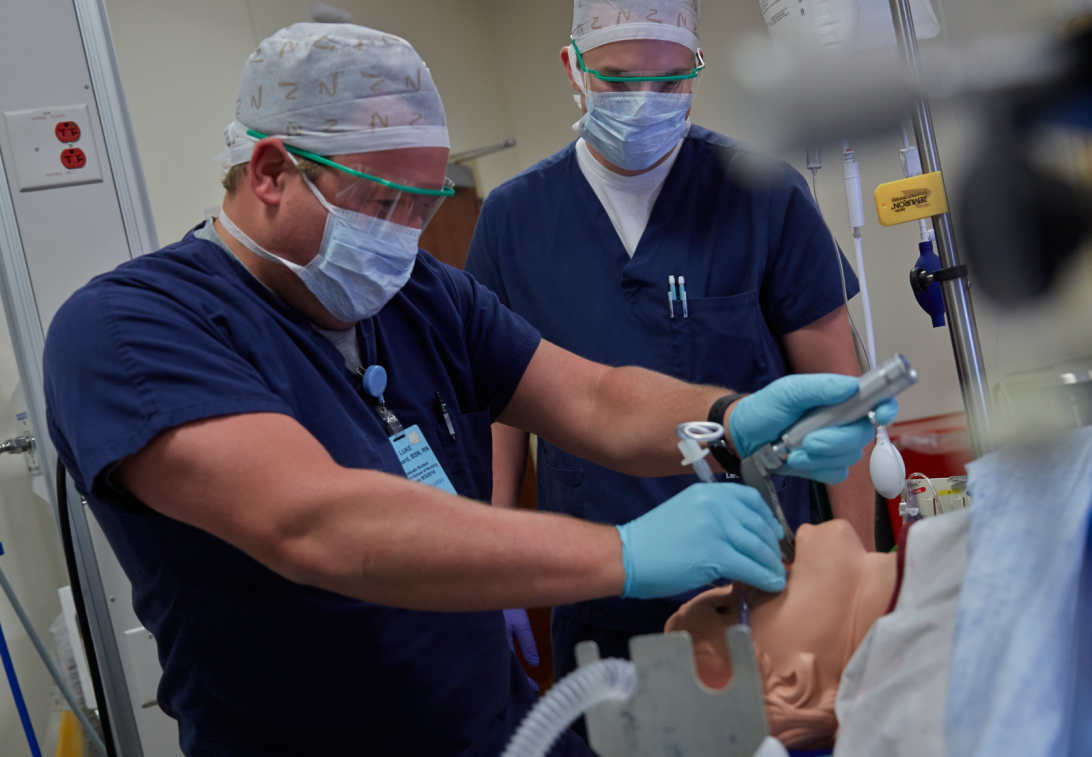
Intimate learning environment |
| Small class sizes and one-on-one interaction with faculty provide an ideal learning environment. Our curriculum, taught by faculty who are practicing CRNAs and anesthesiologists with WashU Medicine Anesthesiology, includes multiple nurse anesthesia courses, core nursing courses in evidence-based practice, health policy, and ethics, as well as an anatomy course featuring a semester-long dissection of cadavers. |
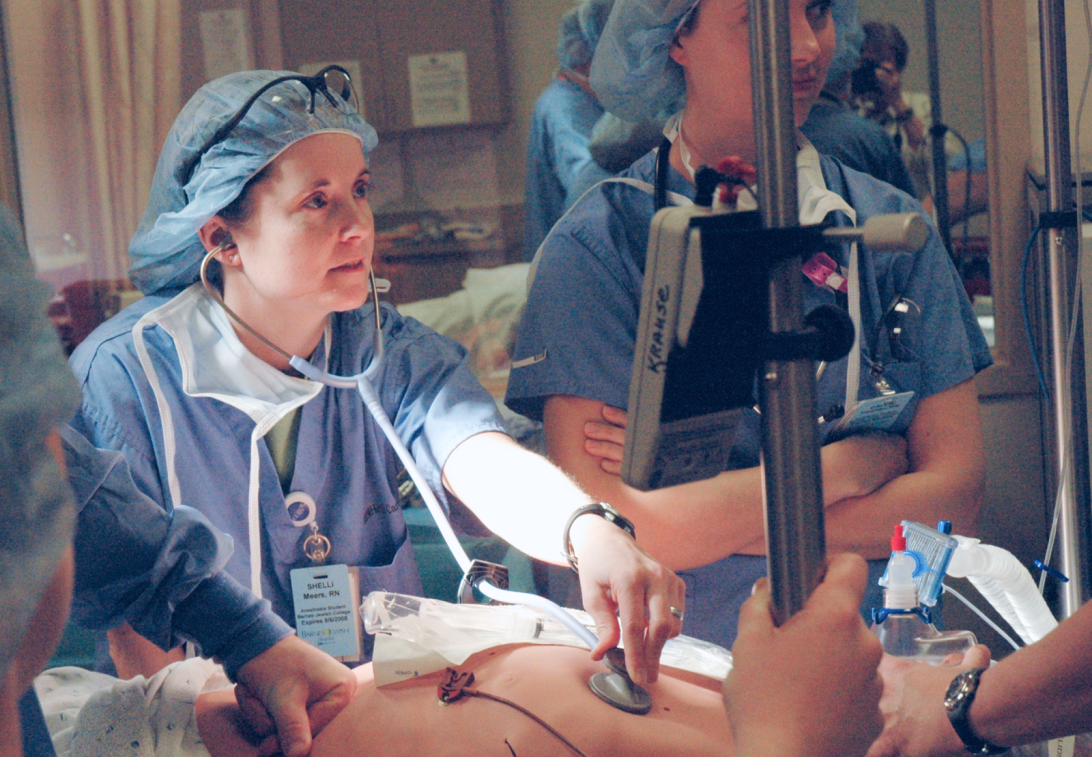
Career prospects |
CRNAs have a variety of employment options following certification, highlighted by Goldfarb’s 100% employment rate upon graduation. CRNAs can work in teaching hospitals, community hospitals, surgery centers, clinics, and critical access hospitals, and our program is aimed at making the transition to any of these settings as seamless as possible. The CRNA program also focuses on developing strong leadership qualities, with many of our graduates becoming CRNA leaders in the profession. |
Admission requirements
All admission requirements, including prerequisite coursework, must be completed prior to the application deadline. Applications with incomplete requirements will not be considered.
*These admission requirements will be initiated with the Nurse Anesthesia Program Admissions cycle which opens on July, 1 2026 and closes on March 1, 2027.
- Bachelor’s or Master’s Degree in Nursing from a regionally accredited college or university, or an equivalent degree from a comparable foreign institution
- Minimum cumulative grade point average (GPA) of 3.0 on a 4.0 scale in all undergraduate and graduate coursework
- Minimum cumulative science GPA of 3.0 on a 4.0 scale in all undergraduate and/or graduate science courses. This includes courses taken in biology, chemistry, physics, physiology, and anatomy
- A minimum of 12 months of full-time RN experience (or it’s part-time equivalent) in an ICU or critical care setting, at the time of the application deadline, in the United States, its territories, or a U.S. military hospital outside of the U.S
- Official transcripts from all previously attended colleges or universities
- Current CCRN certification including official AACN CCRN score report
- Current curriculum vitae or resume
- Current, unencumbered, unrestricted licensure as a registered nurse in the United States
- Two letters of reference from individuals who can address the applicant’s academic ability, professional competency, and professional qualifications. One reference must be from a nursing supervisor or department leader and include a contact phone number. It is preferred that letters of reference be written on official company or university letterhead and signed
- A written personal statement describing the candidate’s reasons for pursuing a doctoral degree in nurse anesthesia, professional goals in advanced practice nursing, and the experiences that have prepared them for success in full time doctoral education. The statement should utilize a business letter format and be no more than two pages in length
Prerequisite Coursework
All prerequisite coursework should be at least 3 credit hours for each course, unless indicated otherwise below. Coursework associated with a prior degree may qualify. Prerequisite courses must be completed at a regionally accredited college or university with a letter grade of B- or higher. Prerequisites completed through StraighterLine will not be accepted**
- Statistics
- Anatomy & Physiology, (minimum 6 credit hours)
- Physics (algebra-based)
- Organic Chemistry or Biochemistry
Enrollment Requirements and Additional Information
- Personal interview on-site (by invitation) with members of the Nurse Anesthesia Admissions Committee
- Current ACLS, BLS, and PALS certification maintained throughout enrollment
- Complete and resolved criminal background check
- Complete and resolved urine drug screen
- Current unencumbered, unrestricted Missouri licensure as a Registered Nurse or a multi-state compact license and in good standing
- To accept and hold an offered position in the program, a $1,000 non-refundable enrollment deposit is required. This amount will be applied toward the cost of attendance upon matriculation
- Advanced standing/transfer Credit: Graduate level courses may be accepted for transfer only if approved by the program director. A maximum of (9) credits may be accepted for transfer, and only those with a grade of B- or greater may be transferred
- International applicants, please review information for international student admission procedures. This information can be found on the admissions webpage or by contacting the admission office directly ([email protected], 314-454-7055)
If an applicant has previously been enrolled in a nurse anesthesia program, he/she can apply; however, no anesthesia-specific courses will be transferrable.
*Prerequisites completed through StraighterLine will not be accepted after Jan. 1, 2026. If you have taken a course through StraighterLine, contact the CRNA program director.
Curriculum
| Course | Credit hours |
|---|---|
| Advanced Pharmacology | 3 |
| Biostatistics & Epidemiology | 3 |
| Health Promotion Theory & Population Health | 3 |
| Foundations of Scholarly Writing & Evidence-Based Practice | 3 |
| Course | Credit hours |
|---|---|
| Healthcare Informatics, Economics, & Financial Principles | 3 |
| Health Systems Policy | 3 |
| Chemistry & Physics Applied to Anesthesia | 4 |
| Leadership & Collaboration for Quality & Safety | 3 |
| Course | Credit hours |
|---|---|
| Graduate Anatomy | 6 |
| Graduate Physiology | 4 |
| DNP Advanced Health Assessment for Nurse Anesthesia | 3 |
| DNP Basic Principles of Anesthesia I | 2 |
| Course | Credit hours |
|---|---|
| Advanced Pathophysiology | 4 |
| Systems-Based Practice & DNP Project I | 3 |
| DNP Advanced Pharmacology & Anesthesia | 3 |
| DNP Basic Principles of Anesthesia II | 3 |
| Course | Credit hours |
|---|---|
| Systems-Based Practice & DNP Project II | 3 |
| DNP Clinical Experience I | 3 |
| DNP Advanced Principles of Anesthesia I | 3 |
| Course | Credit hours |
|---|---|
| Systems-Based Practice & DNP Project IIl | 3 |
| DNP Clinical Experience II | 3 |
| DNP Advanced Principles of Anesthesia II | 3 |
| Course | Credit hours |
|---|---|
| Clinical Correlation Seminar | 1.5 |
| Systems-Based Practice & DNP Project III Extension (optional) | (1) |
| DNP Clinical Experience III | 4 |
| DNP Professional Aspects of Nurse Anesthesia | 3 |
| Course | Credit hours |
|---|---|
| DNP Clinical Correlation Seminar | 1.5 |
| DNP Clinical Experience IV | 5 |
| Course | Credit hours |
|---|---|
| DNP Clinical Correlation Seminar | 1.5 |
| DNP Clinical Experience V | 5 |
| Total minimum credit hours | 92.5 |
|---|
If an applicant has previously been enrolled in a nurse anesthesia program, they can apply; however, no anesthesia-specific courses will be transferrable.
Doctoral level courses may be accepted for transfer only if approved by the program director. A maximum of nine credits, all with an A or B grade, may be accepted for transfer.
Curriculum and schedule of classes are subject to change.
Tuition and fees
Visit the Tuition and Fees page for detailed information. For questions, email the Business Office.
Frequently asked questions
Questions about the program:
- Accredited by the International Federation of Nurse Anesthetists (IFNA) since 2014
- 2025 attrition rate: 6.6% (1 out of 15 students)
- Low overall attrition rate: 2% (3 out of 150 students)
- Employment rate: 100% since 2006
- 2025 NCE first attempt pass rate: 93%
- Overall certification exam pass rate on first attempt: 95%
- Overall certification exam pass rate on second attempt: 100%
- Small class sizes
- Strong academic courses
- High-fidelity mannequin in a simulated operating room used routinely
- Graduate anatomy course with hands-on cadaver dissection
- Strong clinical experience across a variety of BJC institutions, including community hospitals and Level I hospitals, such as Barnes-Jewish Hospital and St. Louis Children’s Hospital
- Experienced faculty members who maintain their clinical practice
- In-person anesthesia courses
- Strong sense of collaboration while being a valued member of a team of anesthesia clinicians
The Nurse Anesthesia Program at Barnes-Jewish College Goldfarb School of Nursing is fully accredited by the Council on Accreditation of Nurse Anesthesia Educational Programs. The program is also internationally accredited by the International Federation of Nurse Anesthetists (IFNA). The College also holds accreditation from the Higher Learning Commission (HLC) of the North Central Association and the Commission on Collegiate Nursing Education (CCNE).
Questions about the admissions process:
The Nurse Anesthesia Program admits one cohort each year, with a class size of approximately 15–20 students. The application portal opens in July of each year, and the application deadline is March 1. Interviews are normally held in April or May. Selected applicants matriculate in the following spring term in January.
To start the application process, visit the Goldfarb application portal and click on “Start Your Application.” The application process is managed through a program called Slate. All supporting documentation must be submitted by the March 1 deadline. Completed applicant materials are reviewed for eligibility, and selected candidates are invited to interview with the Nurse Anesthesia Program Admissions Committee. Applicants not invited for an interview will receive an email notification, with the decision also being posted in their student portal.
Interviews are scheduled across two to three days in April or May. Applicants invited to interview are contacted by email to schedule their session. During the interview, applicants will tour the campus and have an opportunity to ask questions of students currently enrolled in the program.
At the conclusion of the interview process, the Admissions Committee ranks all applicants and selects candidates for admission to the next cohort. Alternate candidates are also identified in case selected applicants decline their offers. Admission and alternate decisions are communicated through Slate by the Admissions Department shortly after final decisions are made.
Yes. All prerequisite coursework must be completed before the March 1 application deadline. Transcripts showing successful completion (a grade of B- or higher) must be submitted, or your application will not be reviewed.
If prerequisite coursework is not completed by the application deadline, your application will be considered incomplete and will not be reviewed.
On average, the program receives approximately 7–10 applications for each available seat. From this applicant pool, about 30–35 candidates are interviewed for each class. Following the interview process, 15–20 applicants are selected for admission. An additional 3–4 applicants are designated as alternates to fill any positions declined by selected candidates.
Yes. You may apply to the Nurse Anesthesia Program if you already hold a master’s degree in nursing or have completed master’s-level coursework.
Up to nine credit hours may be transferred. To be eligible for transfer, courses must be directly equivalent to those offered in the program.
Both are considered. The program reviews the GPA from your baccalaureate degree and calculates a cumulative GPA from all college and university transcripts.
Science GPAs are also calculated and evaluated, including coursework in biology, chemistry, biochemistry or organic chemistry, physics, physiology, pathophysiology, and anatomy. Transcripts are reviewed for overall academic achievement, with science grades weighted heavily.
A minimum cumulative GPA of 3.0 on a 4.0 scale is required in all undergraduate and graduate coursework. A minimum science GPA of 3.0 on a 4.0 scale in all undergraduate or graduate science courses is required.
Letters of reference are preferred for applicants to the Nurse Anesthesia Program, as they provide more in-depth insight than brief reference forms.
Each letter should include the writer’s relationship to the applicant (for example, a co-worker, supervisor, CRNA, or physician). One reference must be from a nursing supervisor or department leader and include a contact phone number.
It is preferred that letters of reference be written on official company or university letterhead and signed. Most importantly, each letter should address the applicant’s academic and clinical potential for success in the Nurse Anesthesia Program.
Questions about clinical experience:
Yes. To be eligible for review, applicants must have a minimum of 12 months of critical care experience at the time of the application deadline.
Additional experience can strengthen your application. Highest priority is given to applicants with recent experience in a high-acuity ICU setting at a Level I Trauma Center (larger hospital or medical center). This setting typically provides a broad base of experience with invasive hemodynamic monitoring, vasoactive drug administration, and ventilator management, including adjusting settings.
Qualifying ICU experience must be obtained in a hospital within the United States, its territories, or a U.S. military hospital located outside the United States.
OR experience is not accepted as critical care experience. The Council on Accreditation requires a minimum of one year of ICU or critical care experience. Applicants working in post-anesthesia care units or Emergency Departments may be considered only if they can demonstrate routine care of patients requiring ventilators, invasive monitoring, and vasoactive infusions.
For this program, ICU experience is strongly preferred over PACU or Emergency Department experience. A critical care setting is defined as one in which a registered nurse routinely manages one or more of the following: invasive hemodynamic monitoring (such as pulmonary artery catheters, CVP, or arterial lines), cardiac assist devices, mechanical ventilation, or vasoactive infusions.
Examples of qualifying critical care units include, but are not limited to, surgical ICU, cardiothoracic ICU, cardiovascular ICU, coronary ICU, medical ICU, neurological ICU, trauma ICU, and pediatric ICU.
Students in the Nurse Anesthesia Program complete clinical experiences at multiple hospitals throughout the program, including Barnes-Jewish Hospital, St. Louis Children’s Hospital, Children’s Specialty Care Centers, Shriners Children’s, Missouri Baptist Medical Center, Barnes-Jewish West County Hospital, and Progress West Hospital.
Many of these facilities care for high-acuity patients. As a result, students are expected to be highly skilled in managing patients on ventilators, with invasive lines, and receiving a variety of medication infusions.
Neonatal ICU experience, due to its limitation in caring for newborns, is not acceptable for our program.
Pediatric ICU (PICU) experience may be acceptable if the applicant can demonstrate strong experience and knowledge in caring for children and young adults who require ventilators, invasive lines, and a variety of medication infusions, as well as familiarity with medical conditions common in adult patients.
Applicants with PICU experience are encouraged to also have adult critical care experience, but it is not required.
Questions about the application process:
Applicants should request that official transcripts and letters of recommendation be sent electronically to Goldfarb Admissions at [email protected]. When applying for the program, applicants may request references through the “References” page of the application portal. In this section, applicants will click “Add New,” enter the recommender’s name, email, contact information, and relationship and then select “Send to Recommender.” This generates an email from [email protected] with a link for the recommender to complete a form and upload their reference letter. Once submitted, the letter of reference will be automatically added to the applicant’s file.
Applicants may continue and submit their application even if recommendations are still pending.
Applicants are encouraged to begin the application process as early as possible to meet the deadline and avoid last-minute issues that could delay consideration. All applications must be submitted through Slate, the student application portal. Applications are not accepted via U.S. mail.
International applicants should review the international student admission procedures available on the admissions webpage or by contacting the Admissions Office directly at [email protected] or 314-454-7055.
For additional questions, contact Malou Jaime, international student adviser, at [email protected].
Applying to the Nurse Anesthesia Program requires that the applicant have a minimum cumulative GPA of 3.0. If the cumulative GPA is below 3.0, the applicant will not be considered for admission and should not apply. An applicant can raise a GPA by retaking courses to improve grades or by taking additional coursework and earning higher grades. A new GPA will then be recalculated from both new and previous transcripts. However, raising a GPA is a slow process—the more credit hours completed, the slower the rate of change.
Science courses and critical care experiences are two areas that are weighted heavily. If you have prerequisite science coursework to complete, earning an A or a B in those courses will strengthen your application. Experience in a Level I trauma center can provide exposure to a wide variety of critical care experiences.
Additionally, experience with adult patients is highly recommended in critical care settings, such as cardiothoracic, cardiovascular, cardiac, medical, surgical, neurology, PICU, and trauma. It is important to have a wide variety of clinical experiences, which may require more than the minimum requirement of 12 months of experience.
Yes. In addition to requiring the CCRN, we also require submission of an official AACN CCRN score report.
Core nursing courses are offered online, while most of the nurse anesthesia-specific courses are conducted in person. On-campus attendance is required for these courses. Attendance in both the classroom and the OR is mandatory.
No. The program must be completed on a full-time basis. Part-time enrollment is not available.
Either course will fulfill the requirement, as long as it is three credit hours. However, the course content must be specific to organic chemistry or biochemistry. A general chemistry course alone will not meet the requirements. An applicant’s personal preference, based on course descriptions, may influence an applicant’s choice between organic chemistry and biochemistry, but this choice will not affect the likelihood of admission. The grade earned in the course is what matters most during the review process.
Undergraduate physics is a required prerequisite for the program. The course should be algebra-based and carry at least three credit hours. These courses are often identifiable by listing college algebra as a prerequisite. A lab component is not required.
No. Labs are not required for these prerequisite courses. Each course must be at least three credit hours, and the physics course must be algebra-based. The goal is to ensure a foundational understanding of the subject matter.
Please visit the tuition and fees section of the website for detailed information. In addition to tuition and fees, students should plan for additional expenses, including textbooks, learning technology, professional meeting attendance, AANA student membership fees, background check and drug screening fees, graduation fees, the national certification exam fee, and the self-evaluation exam fee.
Health insurance is required while enrolled in the program, and costs may vary by individual. Students are encouraged to research and plan for their health insurance expenses in advance.
All costs are subject to change.
No. The GRE and GMAT are not required to apply to the Nurse Anesthesia Program.
There are no specified time limits for prerequisite coursework. However, it is preferred—and beneficial to the applicant—that coursework, especially in the sciences, is completed more recently.
Although a shadowing experience is not required, it is highly encouraged. Shadowing a CRNA helps the applicant to better understand the role of the CRNA.
If you know a CRNA, you can ask to shadow them. You can also call anesthesiology departments of hospitals and ask for an opportunity to shadow a CRNA. There are no minimum number of hours required.
Questions about the classroom and student experience:
A typical day depends on the term. During the first two terms of the DNP program, students are not in the OR, and a highly motivated student may be able to work, but it will not be easy, and coursework may suffer as it is a very rigorous, full-time program. During the third term, students carry a heavy academic load, and many of the courses are on campus. Students also spend clinical time in the Center for Preoperative Assessment and Planning.
Students begin clinical work in the OR in the fourth term while continuing coursework at the College. As students progress through the program, class time decreases, and clinical time in the OR increases. During the final terms, students are in the OR, and they are also enrolled in a course that prepares them for the national certification examination. Students are highly encouraged to not work while enrolled in the three-year program.
If they are highly motivated, students may be able to work part-time during the first, and possibly the second, terms because most of their courses are online. However, it will not be easy. We strongly recommend that students do not work while enrolled in the program due to the demanding academic coursework and high volume of clinical time. A grade below a B- is unacceptable for nurse anesthesia-specific courses and will result in termination from the program.
Most clinical sites are on the Washington University Medical Center campus. For example, Barnes-Jewish Hospital, along with St. Louis Children’s Hospital, are connected by an internal walkway. Shriner’s Children's is only a few blocks away and within walking distance from the College. Other clinical sites are less than 30 miles from the College.
Questions about admission decisions:
- Continue working in the critical care setting to gain additional critical care experience. The Council on Accreditation requires a minimum of one year of critical care experience, and our program requires 12 months at the time of application submission. However, that is often not enough to be accepted. Continuing in the critical care setting for a longer period will strengthen your application
- Recent or current ICU experience is recommended. If you do not have recent ICU experience, consider returning to the ICU
- Try to learn as much as you can while working in a critical care setting. Ask questions and think critically about your clinical decisions. If you administer an infusion of a particular drug (narcotic, sedative, vasopressor, or vasodilator), make sure you understand its mechanism of action and side effects. Consider why specific pharmacotherapies are used and how a patient’s condition informs the plan of care. Interpret lab values, such as CBC, BMP, ABGs, and anticipate actions. If you have any questions or confusion about the care the patient is receiving, ask the physician, nurse practitioner, or senior ICU nurse, and read about the disease processes to strengthen your knowledge base
- Consider working in a Level I hospital. These patients are often more complex, with multiple comorbid conditions, and you will be challenged by taking care of patients with higher rates of morbidity and mortality. This environment also provides more opportunities for critical thinking and working with advanced technologies
- Increase your overall cumulative GPA by taking more courses and earning A grades. However, realize that the more courses you have already completed, the slower this process is to increase your overall GPA
- If you only have pediatric critical care experience, consider working in an adult critical care setting to gain broader experience
- If you only have Emergency Department or PACU experience, consider transferring to an ICU
- Seek leadership opportunities within your unit. Be proactive in joining or participating in research or QI projects within your unit
What to expect after you finish the program:
WashU Medicine Anesthesiology, where nurse anesthesia students complete their clinical training, hires CRNAs. The department employs more than 200 CRNAs across various hospitals. For more information, contact David Eisenbath at [email protected] or Erin Herrera at [email protected].
Program Leadership
For questions about the CRNA program please email us at [email protected].
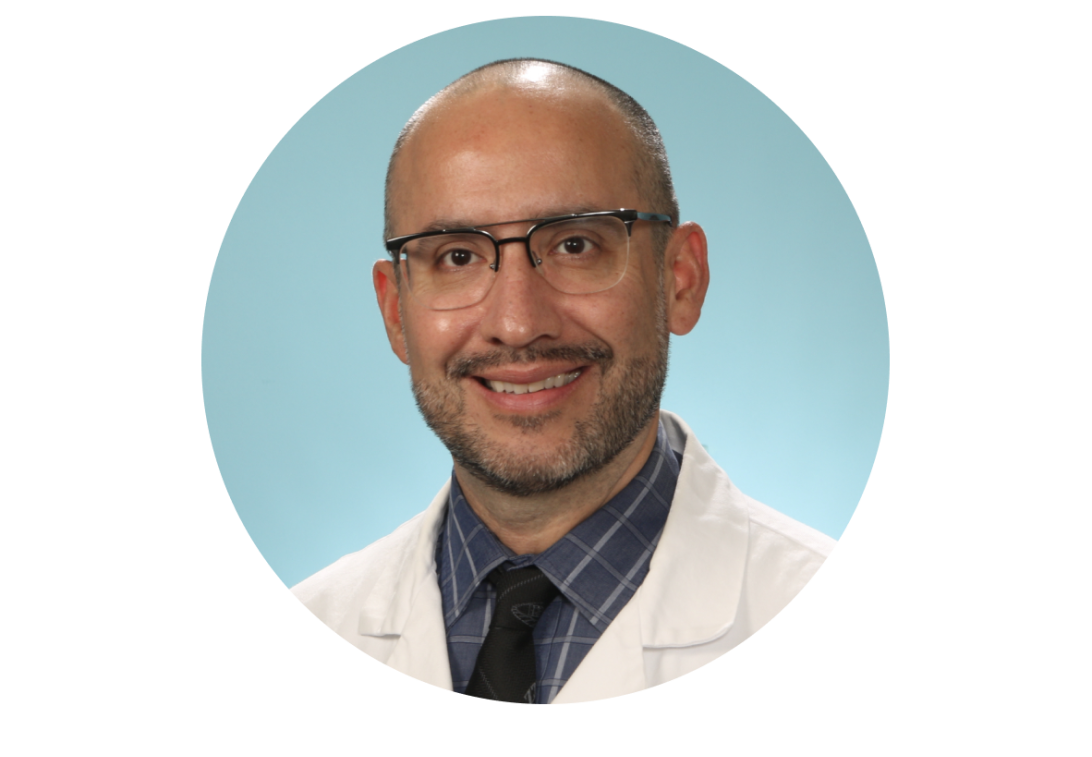
Brian Torres, DNP, CRNA | ||
Dr. Brian Torres, associate professor and director of the Nurse Anesthesia Program at Barnes-Jewish College Goldfarb School of Nursing, has advanced CRNA education since 2013. He maintains active clinical practice in cardiothoracic and vascular anesthesia at Barnes-Jewish Hospital while conducting research on intraoperative awareness, electroencephalography applications, and telemedicine. His evidence-based teaching and rigorous program evaluation ensure the program's distinction as a premier institution for nurse anesthesia education. |

Sarah Perez, DNP, CRNA |
Dr. Sarah Perez, associate professor and assistant director of the Nurse Anesthesia Program at Barnes-Jewish College Goldfarb School of Nursing, has shared her passion for teaching and advancing nurse anesthesia scholarship since 2011. Sarah plays a pivotal role in student scheduling, managing clinical rotations, and teaching and mentoring students in chemistry, physics, physiology, and pathophysiology. She maintains clinical practice at the Center for Advanced Medicine at Barnes-Jewish Hospital. |
Take your next step at Goldfarb
Apply today
Take the first step toward your future.
Contact us
Our amazing staff at Goldfarb are here to answer your questions.
Request info
Need more information? Simply fill out our request form and we will follow up with you.